

Equality for All

Listen. Across markets, back alleys, community halls and living rooms from Nairobi to Lagos, people are telling themselves who they are. Equality for All was our invitation to listen more carefully. It began as a question: what happens when the people most affected by unfair laws, slow courts, unequal economies and quiet everyday exclusions are given space to tell their stories in their own language and in their own voices? The campaign grew into a living archive of testimony, witness and imagination. It is a map of justice made of sound, text, film and the rhythms of ordinary life. The work we published was never meant to lecture. It was meant to reframe. It was meant to turn data into faces, policy into pulse, and statistics into songs.
Stories do the work that reports cannot. They translate law into lives, policy into possibility. If justice is to be more than a word, we must let the people most intimate with its absence define what it looks like.

Africa is home to roughly one and a half billion people, a fact that makes the stakes of justice and equality continental in scale (Our World in Data). Seventy percent of Sub-Saharan Africa’s population is under the age of thirty, representing a powerful demographic force. Young voices are not only the future; they are the majority present (United Nations). Internet access across the continent is expanding rapidly but unevenly. While large national markets now count tens of millions of users, many rural areas remain chronically offline. Nonetheless, the use of social platforms and audio streaming continues to rise each year (DataReportal – Global Digital Insights). Most of the world’s extreme poverty is concentrated in Sub-Saharan Africa, and this economic pressure shapes how people experience justice, mobility, and voice (World Bank). Public perception also plays a critical role. Recent Afrobarometer data shows that a majority of respondents believe people are often or always treated unequally under the law, and many perceive discrimination based on economic status. These perceptions shape civic trust and the appetite for change.
Today, the impact of ‘Equality for All’ continues to grow, with stories being shared in classrooms, youth forums, and community spaces, sparking deeper conversations and inspiring collective action.
Stories of Change: Journeys Toward Justice and Equality

Scaling Up Women’s Empowerment
Women in Kenya face high levels of unemployment, particularly amid a weakened economy over the COVID-19 period, the situation is even worse for young women who risk domestic violence, trafficking, rape, depression, and inability to care for themselves and their...

The Road To Economic Equality
Economic equality is the belief that people should be paid the same rate for the same job regardless of race, gender, or other factors that are unrelated to their ability to perform the task. Along the same lines, I believe that economic equality is about creating a...

A problem said, a problem half-solved
George Odiero
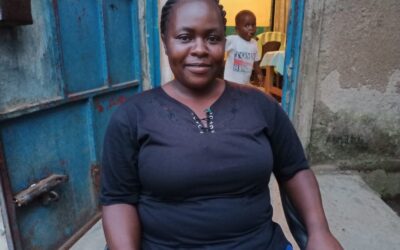
Justice will be served
Joans Arodi
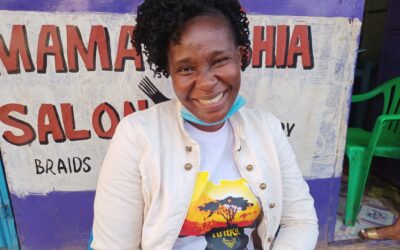
It shall be well
Martin Nyawara.
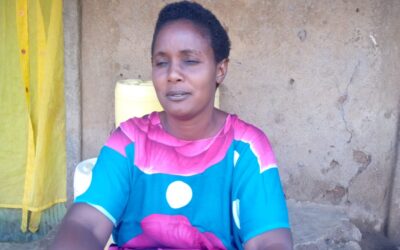
The girl behind
Steasy Atieno
Echoes of Equality: Our Podcasts
Visions of Change: Our Video Stories
Testimonials

“You know that moment when you have to convey something but you just don’t know how to express it? Ashitha’s brand of storytelling is everything I think but fail to put the thoughts into words. It’s a medium through which I can convey. Like how you tag your friends in memes off-late when you find something relatable.
But seriously, it takes a lot for a blogger to pick a generic topic and give it a fresh perspective or outlook and that’s what makes the blog stand out. Every blog written is grey unlike other articles that are usually either black or white. Writing is like a mirror, as most of us raise questions and draw our own conclusions”
Varun Kashyap CV

Being a reluctant reader, it’s very rare that I read blog posts or articles but Ask Ashi surprisingly happens to be an exception.
It’s interesting that the writer has a unique sense of simplicity in conveying the intention and the information that connects with the reader instantly.
My personal favorite being “To swing both ways” – what seems like a normal interview with a bisexual is more than just that – it is very educative and impactful that has it’s feels.
The range and choice of topics are impressive as I am either able to connect to them or intrigued to know and understand the different perspectives. I keenly look forward to the notification of the next blog post from Ask Ashi.
Metha Rathnam

Correction: it isn’t easy for some of us.
Ashi makes it look like a breeze, with strongly structured prose you can follow with ease. Her blog posts are so current that you couldn’t fail to connect and spend some time after, to reflect/introspect.
It is great to see someone follow their passion, and throw in the readers’ faces truths they may wish to hide from, like how they may not be doing their best to help the society they grew up in (Let’s Be The Change) or about sensitivity to people’s sexual orientation (To Swing Both Ways).
While complete finesse in the articles may not have been reached, the blog does its part in connecting Ashi to her readers and making them contemplate on various topics.
Nidhi Raj

I have known Ashi for 6 years now and what I can definitely validate is that she is that fiery soul who will keep pushing forward no matter what and she will do anything to get there. However, this is a testimony to Ashi’s writing and not her personality, so let’s go there now.
For as long as I have known her, she has been evolving, yet sticking to what she knows best.
Similarly, her stories are ever-morphing, yet sticking to the true essence of what they are always meant to be. I am not writing this to tell you guys that her stories are so relatable, or that she takes the nuances of life and gives her own twist to it or all that other usual jazz (which is all true of course), what I am here to say is that, just like her, her stories are powerful enough to keep a mob in rapt attention, and just like her, her stories keep gaining more substance with every passing post.
If you read under the lines, you will realize that her posts, just like her, not only take the small things in life and make them bigger, but also take the big things in life and make them even bigger.
Anusha R Chandra